World Cup Private Jet Demand Surges: Over 73,000 Flights Expected, New York Accounts for Nearly 40%
During the 2026 FIFA World Cup in the US, Canada, and Mexico, FIFA President Gianni Infantino heated discussions for watching every group stage match without missing a single one: without a "teleportation portal," his private jet allowed him to "spend the first half in Philadelphia and the second half in New York."
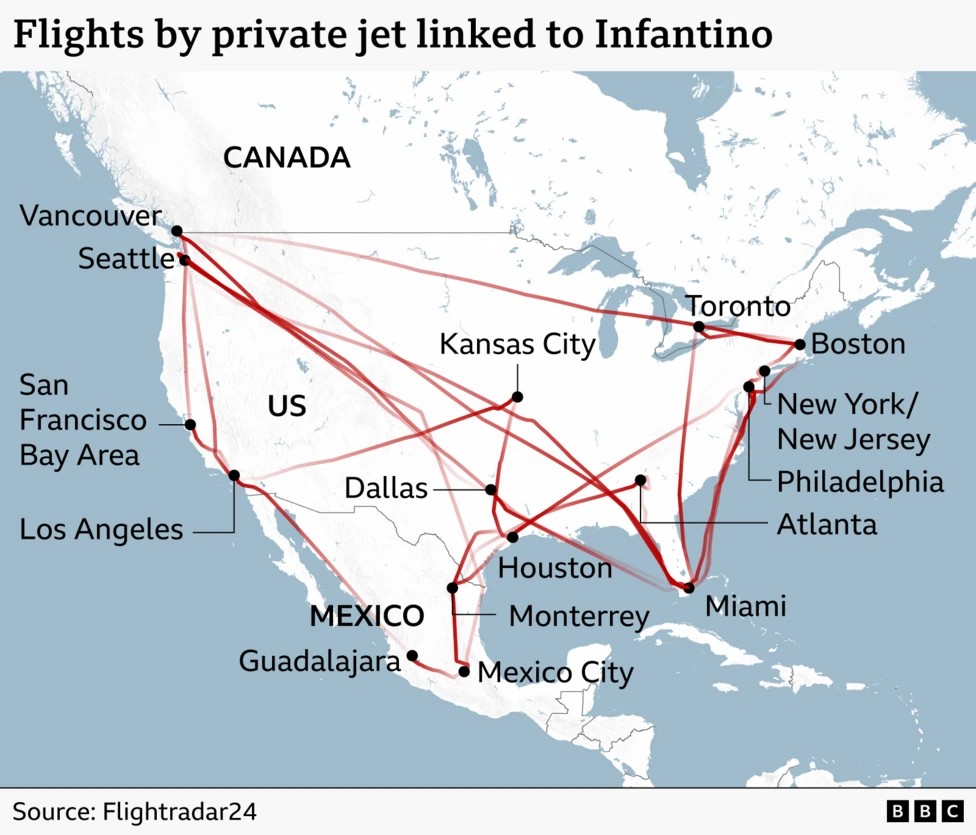
Data shows that over two weeks, Infantino used private jets to watch 24 matches across North America, covering thousands of miles. The longest flight was from Vancouver to Miami on June 13, spanning 4,507 kilometers.
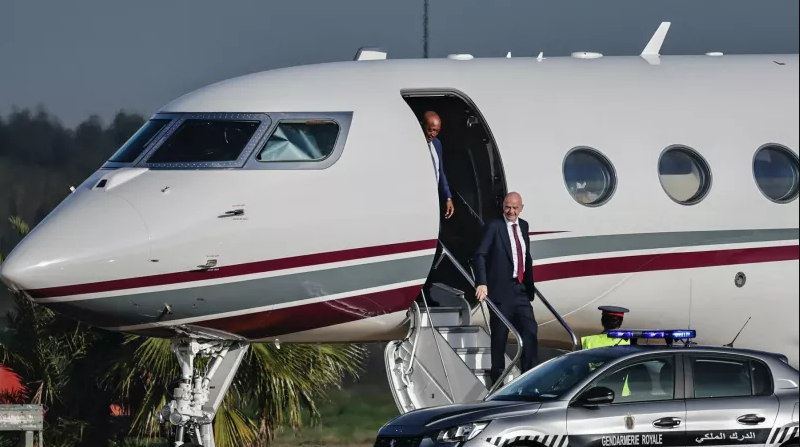
Above: Infantino aboard a Gulfstream G650ER operated by Qatar Executive, heading to a World Cup match
However, private jets are not exclusive to Infantino. FIFA previously estimated that 6.52 million people would attend World Cup matches this year. High-net-worth spectators have directly driven demand for private jets. (Related reading: Report Analysis: FIFA 2026 World Cup Socio-Economic Impact Report)
On June 12, the US team's home opener in Los Angeles saw David Beckham, Tom Cruise, and many other celebrities in attendance. According to JetSpy, a private jet data tracker, approximately 250 private jets landed at Los Angeles area airports, including 76 ultra-long-range models (such as the $65 million Gulfstream G650), owned by companies like Nike and Disney, as well as billionaires like Bill Gates.
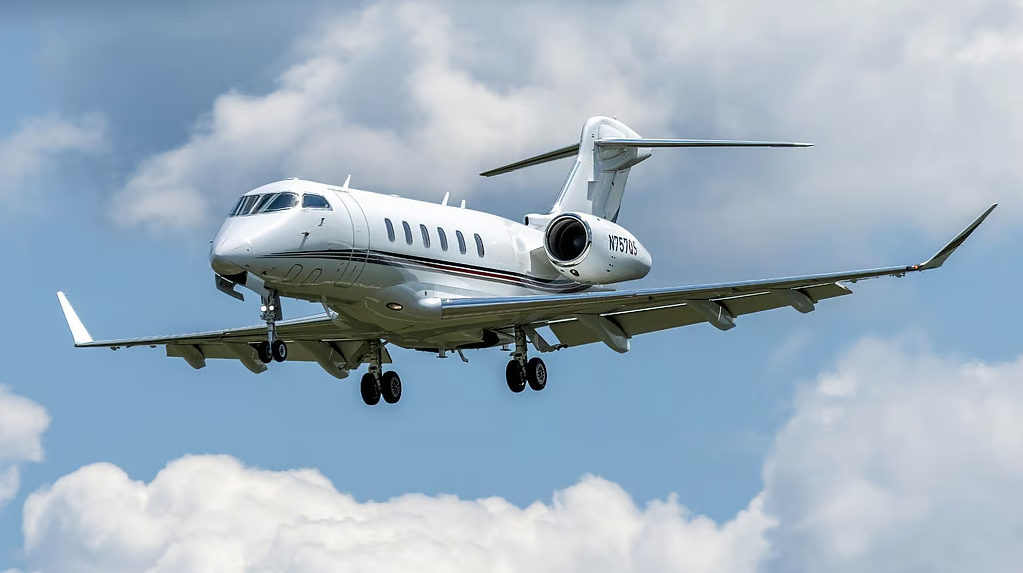
Above: David Beckham's private jet, a Bombardier Challenger 350
Depending on a number of factors, including distance and the aircraft type, a two-way charter will cost between $15,000 and $60,000. And fixed base operator fees (essentially, the right to park at an airport) at peak times such as the World Cup can reach $30,000 on their own.
Aviation data firm WingX predicts:
- Across the 16 host cities, over 73,000 private jet-related flights are expected on match days, with New York alone accounting for nearly 28,000 flights.
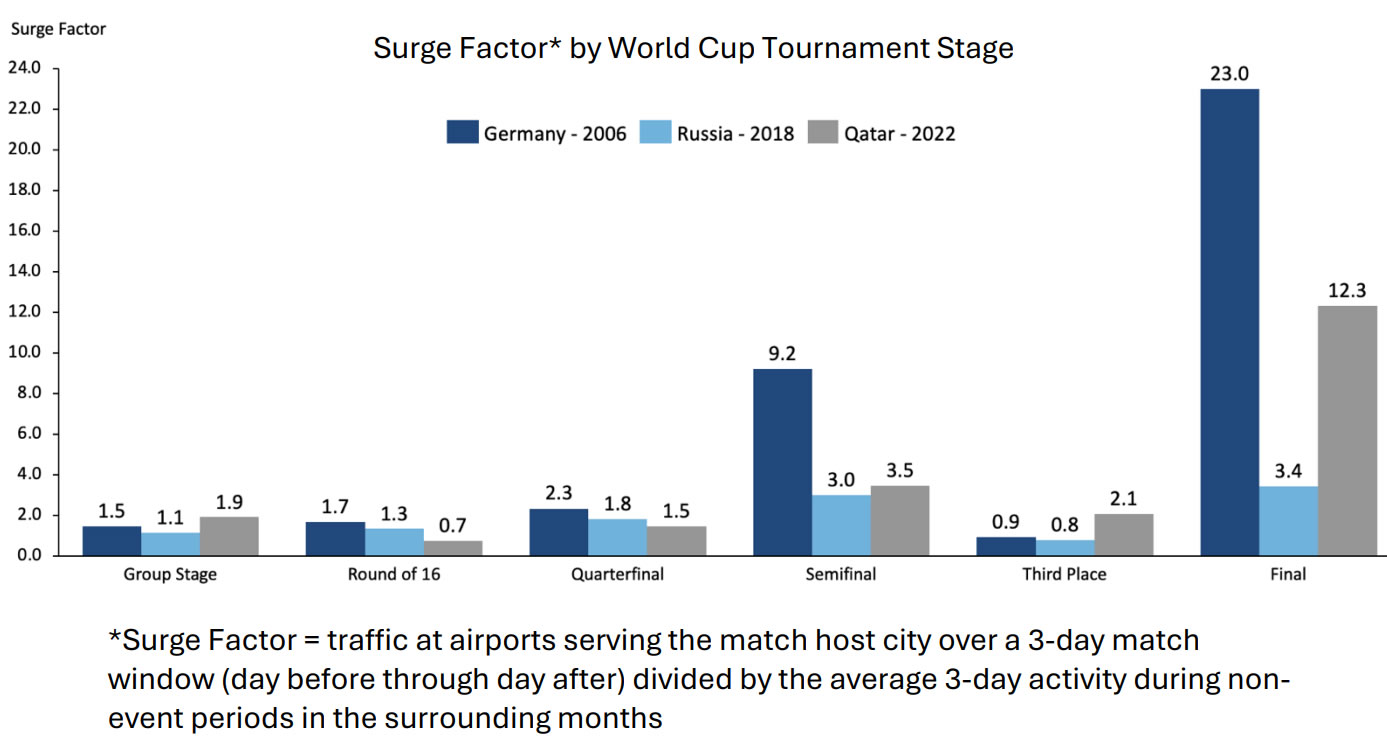
- During the group stage, flight volumes at host city airports surged by more than 1.5 times. This has been confirmed; for example, during the US vs. Australia match on June 19, Seattle's King County Airport saw nearly double the traffic compared to the same period in previous years.
- As the tournament progresses, demand for business jets surges: 5.2 times during the semifinals and 12.9 times during the final.
Multiple business jet operators have echoed similar views:
Greg Raiff, CEO of US private jet charter company Elevate Jet, said: "Travel demand during the World Cup has exceeded expectations; we have never seen such strong demand for flights between host cities."
Jamie Walker, Executive Chairman of US private aviation operator Jet Linx, said: "Sales across all our markets are up about 22% compared to the same period last year. Dallas (the city hosting the most matches) has the highest flight volume, more than double last year. New York and New Jersey also saw increases. The more matches concentrated in certain cities, the higher the flight volume."
As for participants, although some players own private jets, none of the 48 national teams flew business jets to North America due to limited capacity. They mainly chartered wide-body aircraft operated by their national airlines, typically used for regular passengers.
For example, Brazil flew on a Boeing 767-300ER operated by Aeronexus, featuring VIP interiors with fully lie-flat seats; France flew on an Airbus A321LR operated by La Compagnie, with 76 seats in an all-business-class layout; Norway, Scotland, and Sweden all flew on a Boeing 757-200 operated by Icelandair, equipped with 80 premium economy reclining seats.
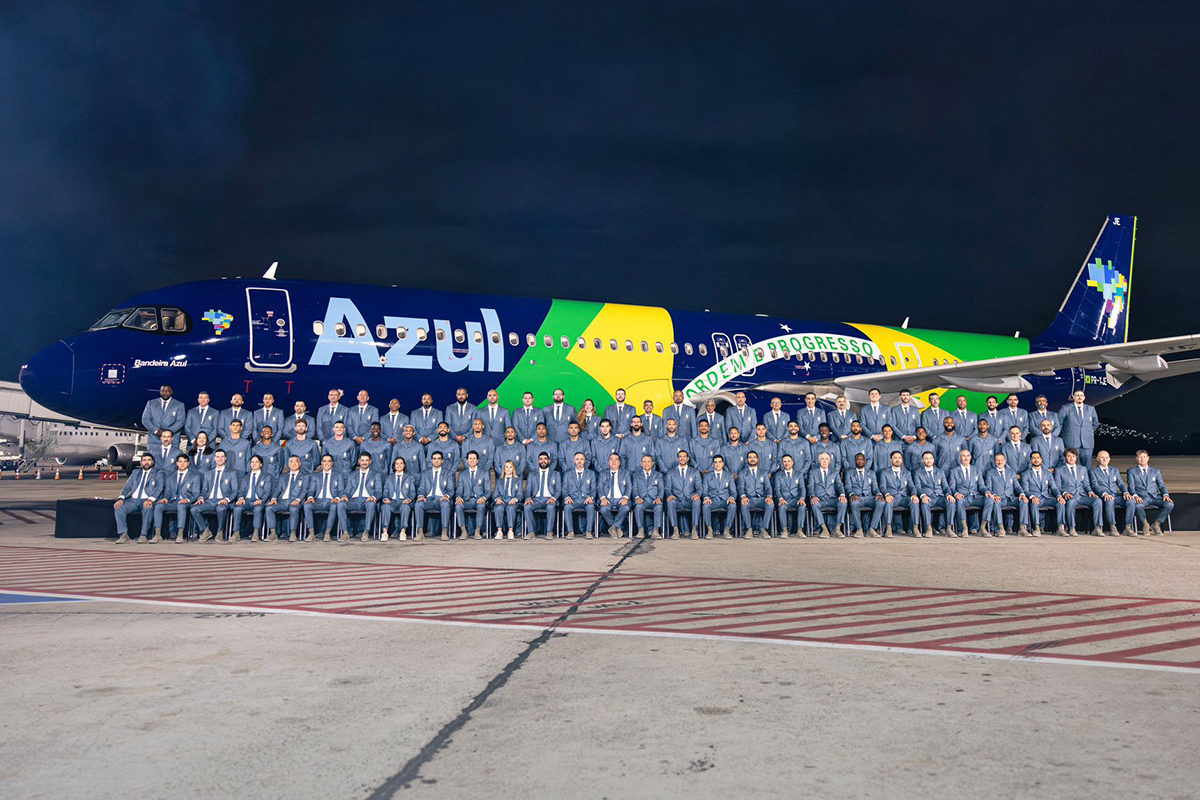
Above: The Brazilian national team traveling on a Boeing 767-300ER operated by Aeronexus
Beyond the World Cup, major sports events have increasingly driven private aviation in recent years, such as the Super Bowl, the Masters Tournament, and F1 races. For example, at the Masters in 2025, over 2,050 business jets arrived in the Augusta area, a 34% increase from 2019. This year's numbers are even higher, 15 times the normal weekly flight volume at Augusta Airport.
| Sources: BBC, simpleflying, mansionglobal, robbreport, blueskynews
| Image credits: AFP, Aviation Voice