Report: FIFA 2026 World Cup Socioeconomic Impact Analysis Report
In March 2025, FIFA and the World Trade Organization (WTO) jointly released the 2026 World Cup Socioeconomic Impact Analysis Report, providing a structured and comprehensive analysis of the tangible and intangible benefits of this year's tournament.
The report estimates that the 2026 World Cup will attract 6.52 million live spectators, generate $13.9 billion in event-related spending, deliver a gross economic impact of $80.1 billion, and create an additional $8.28 billion in social value.
Below is an analysis of the report by Orange Bay Sports:
I. Macroeconomic Impact of the World Cup
The report projects the following impacts from this year's World Cup:
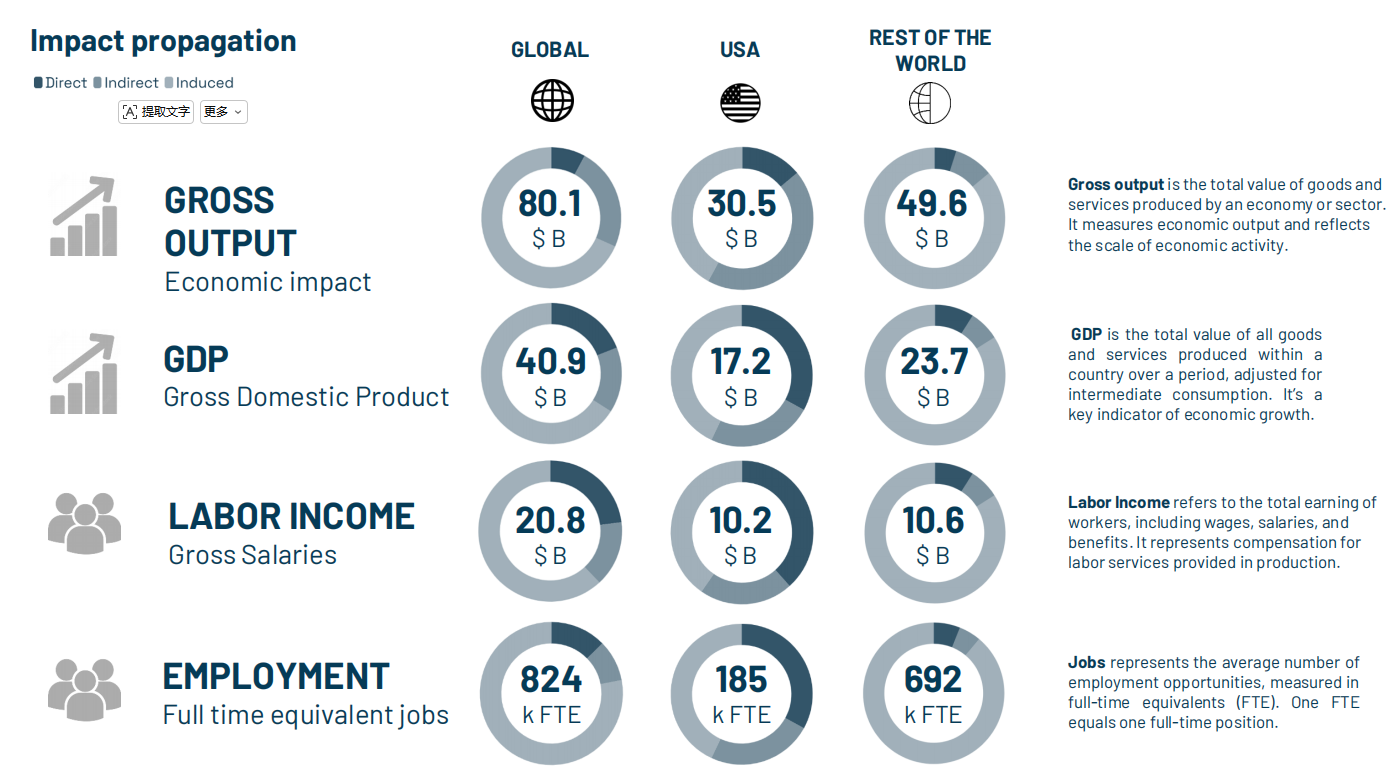
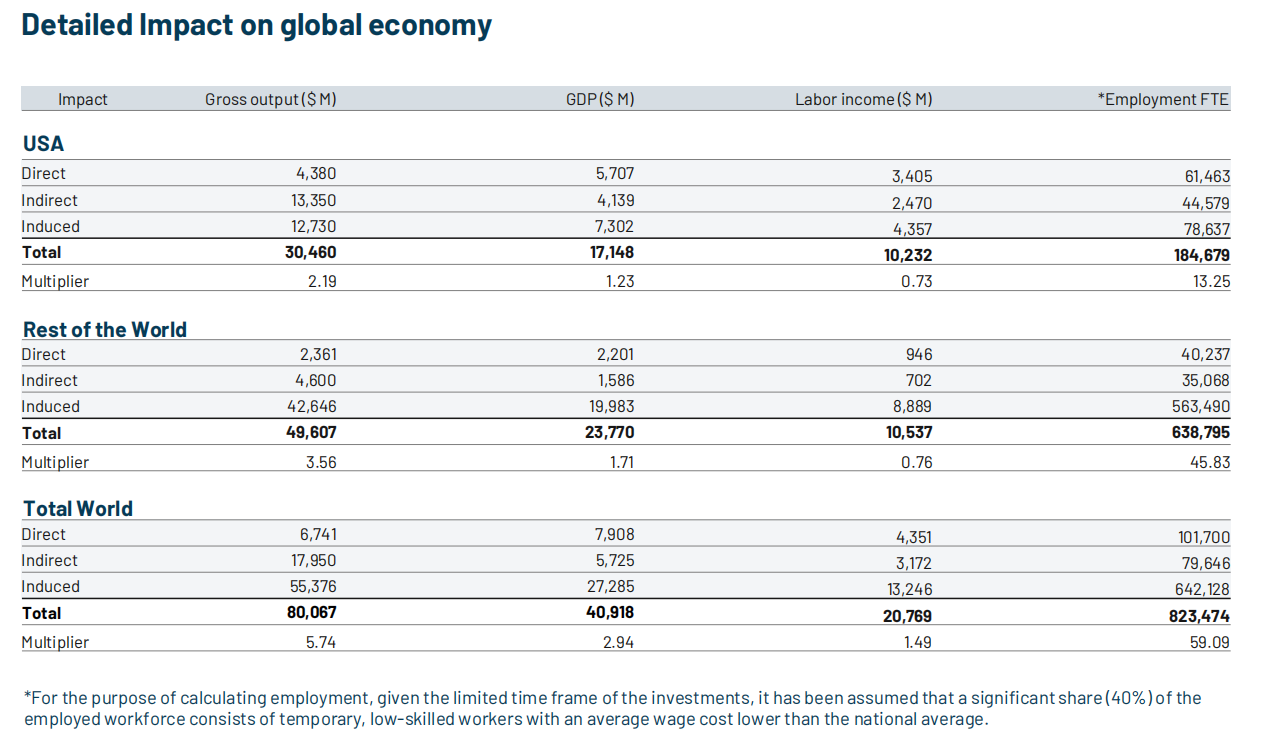
- Total gross output will reach $80.1 billion, with approximately $30.5 billion in the United States and $49.6 billion in the rest of the world.
- GDP will reach $40.9 billion, with $17.2 billion in the United States and $23.7 billion in the rest of the world.
- Labor income will reach $20.8 billion, with $10.2 billion in the United States and $10.6 billion in the rest of the world.
- 824,000 full-time jobs will be created globally, including 185,000 in the United States and 692,000 in the rest of the world.
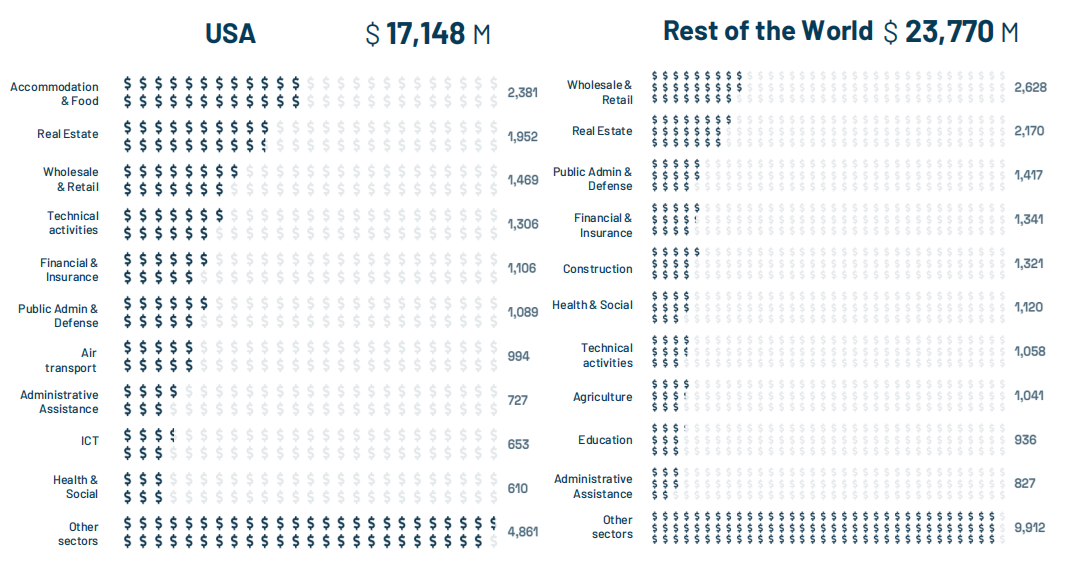
In terms of GDP value added, the sectors benefiting most in the United States are accommodation and food services ($2.38 billion), followed by real estate ($1.95 billion) and wholesale and retail ($1.47 billion).
Service sectors in other advanced economies and developing countries will also see significant impacts, particularly wholesale and retail ($2.63 billion) and real estate ($2.17 billion).
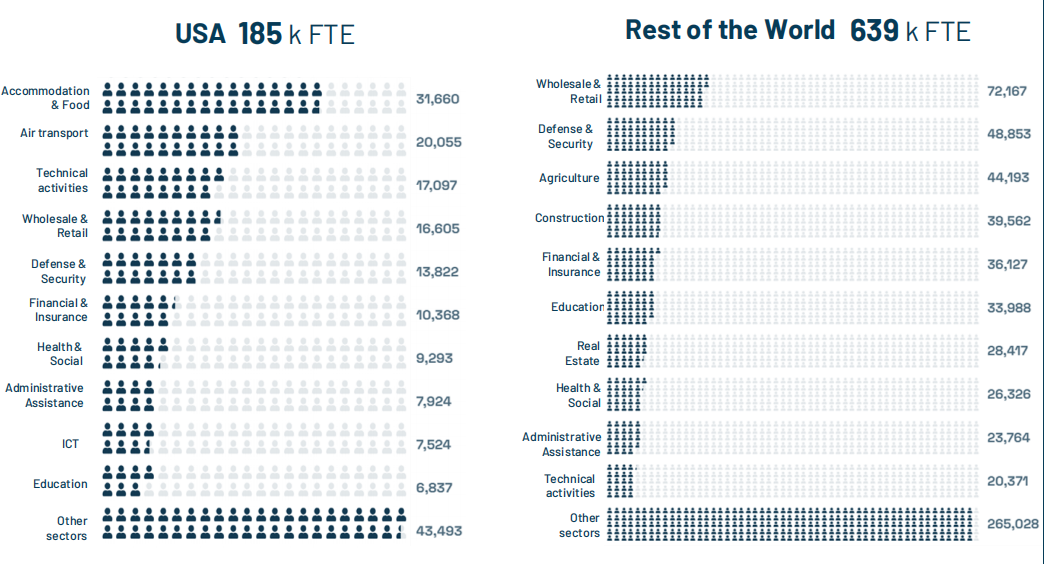
In terms of job creation, the accommodation and food services sector in the United States will see the largest increase, with 32,000 jobs, followed by air transportation (20,000 jobs) and technical activities (17,000 jobs).
In other countries, wholesale and retail will stimulate the most employment, with 72,000 jobs, followed by defense and security (49,000 jobs) and agriculture (44,000 jobs).
II. Tourism, Sports, and Entertainment to Absorb Spillover Economic Benefits
The 2026 World Cup will generate an additional $8.28 billion in social value, broken down into three areas:
Tourism are the highest, at $5.16 billion: assessed using consumer surplus and estimated using the "rule of half", covering benefits from tourism during the event and subsequent years.
Sports ($2.6 billion) rank second: the total value depends on the estimated number of local spectators attending matches. This figure serves as the basis for applying proxies to calculate savings in healthcare costs, reductions in crime rates, and increased spending on injuries (negative benefit). The analysis spans a five-year period, incorporating the event's legacy, with a linear reduction in benefits over time.
Entertainment ($520 million) rank third: this value arises from consumer surplus, with the value of time allocated between US residents and tourists. Social media engagement also plays a significantrole, calculated based on the value per click.
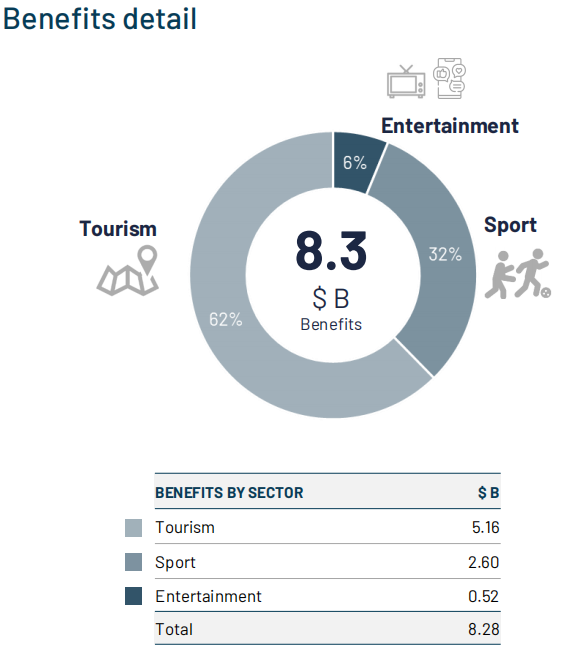
The global overall social return on investment is 3.64, meaning that for every dollar invested, society as a whole benefits by $ 3.64. As the host of 11 matches, the United States has a social return on investment of 4.03.
III. Total World Cup Spending Approximately $3.8 Billion
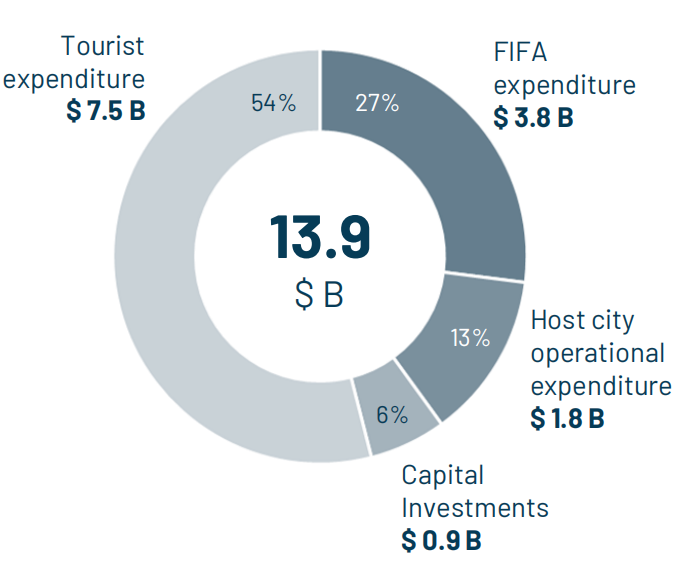
The 2026 World Cup is the first to be held across three countries (U.S., Canada, Mexico) and the first with 48 teams. The report estimates that total event-related spending will reach $13.9 billion, covering capital investment, host city costs, FIFA budget, and tourist spending.
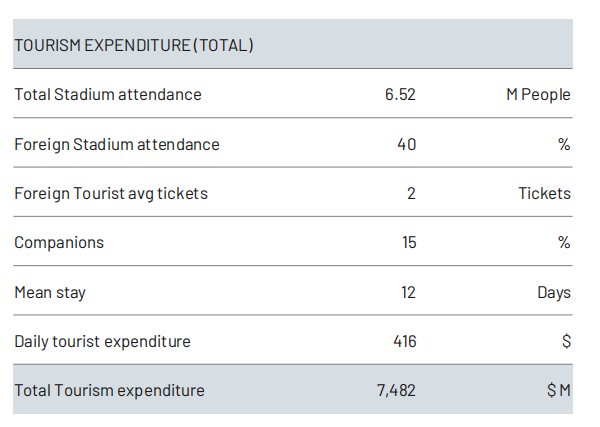
Tourist spending accounts for the largest share, with an estimated 6.52 million live spectators spending $7.48 billion.
According to FIFA data, Total stadium attendance is estimated at 90% of the stadium's full capacity. Assuming 40% of total stadium attendees are foreign tourists, and each tourist typically has 15% companions, the report estimates each tourist watches an average of two matches. To determine total spending, the report multiplies the estimated number of tourists by an average daily spending of $416 per tourist, multiplied by 12 days.
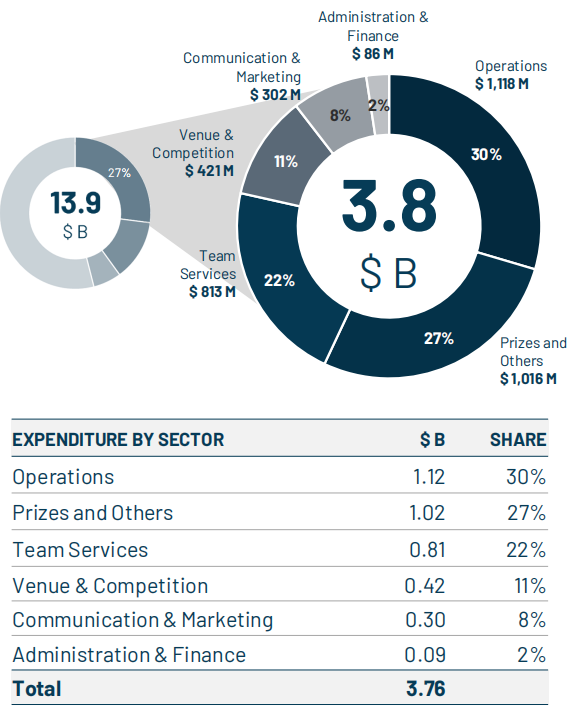
The second-largest spending category is FIFA total expenditure, reaching $3.8 billion, primarily allocated to:
- Operations ($1.12 billion): the operations cost cover event management, operational staff, temporary infrastructures, and the logistics required to ensure the smooth running of the event.
- Prizes and others ($1.02 billion): Includes the Prize Money, the Club Benefit Program, the Legacy, and other collateral costs.
- Administration and finance ($900 million): Includes event management-related costs, administrative staff salaries, and other management expenses.
- Team services ($810 million): Includes expenses for accommodation, transportation, technical support, logistics, and other needs
of the participating teams. - Venue & Competition ($420 million): Venue costs include maintenance or rental, sports equipment, and other direct costs of hosting matches.
- Communication & Marketing ($300 million): For promotion and marketing, such as leveraging digital platforms like FIFA+.
Appendix: Detailed Global Economic Impact of the 2026 World Cup
| Source: Original report
| Image source: Original report