Revenue Surges 70%, FIFA is the Big Winner of the 2026 World Cup Economy
At midnight on July 20, Beijing time, the 2026 World Cup final in the United States, Canada, and Mexico is about to kick off. Whether Spain or Argentina lifts the trophy, one of the biggest winners of this World Cup has already emerged: FIFA.
According to a BBC report, the 2022 Qatar World Cup set a revenue record of $7.6 billion, while the 2026 World Cup, expanded to 48 teams, far exceeds the previous edition's commercial income.Marion Laboure, Senior Strategy Analyst at Deutsche Bank Research, stated that FIFA's revenue in this World Cup cycle is close to $13 billion.

Above: The World Cup trophy and the official trophy case created by Louis Vuitton for the event
FIFA's main revenue comes from broadcasting, IP licensing, event VIP hospitality, sponsorship deals, and ticket sales. Therefore, to further drive growth, FIFA is considering expanding the tournament to 64 teams, potentially including countries like China and India, to attract billions of viewers.
FIFA's commercial innovations in this cycle are systematic. For example, this World Cup will introduce championship rings for the first time. A total of 2,026 limited-edition rings will be produced, with 30 awarded to members of the winning team and the remaining 1,996 sold to global fans as officially licensed products.

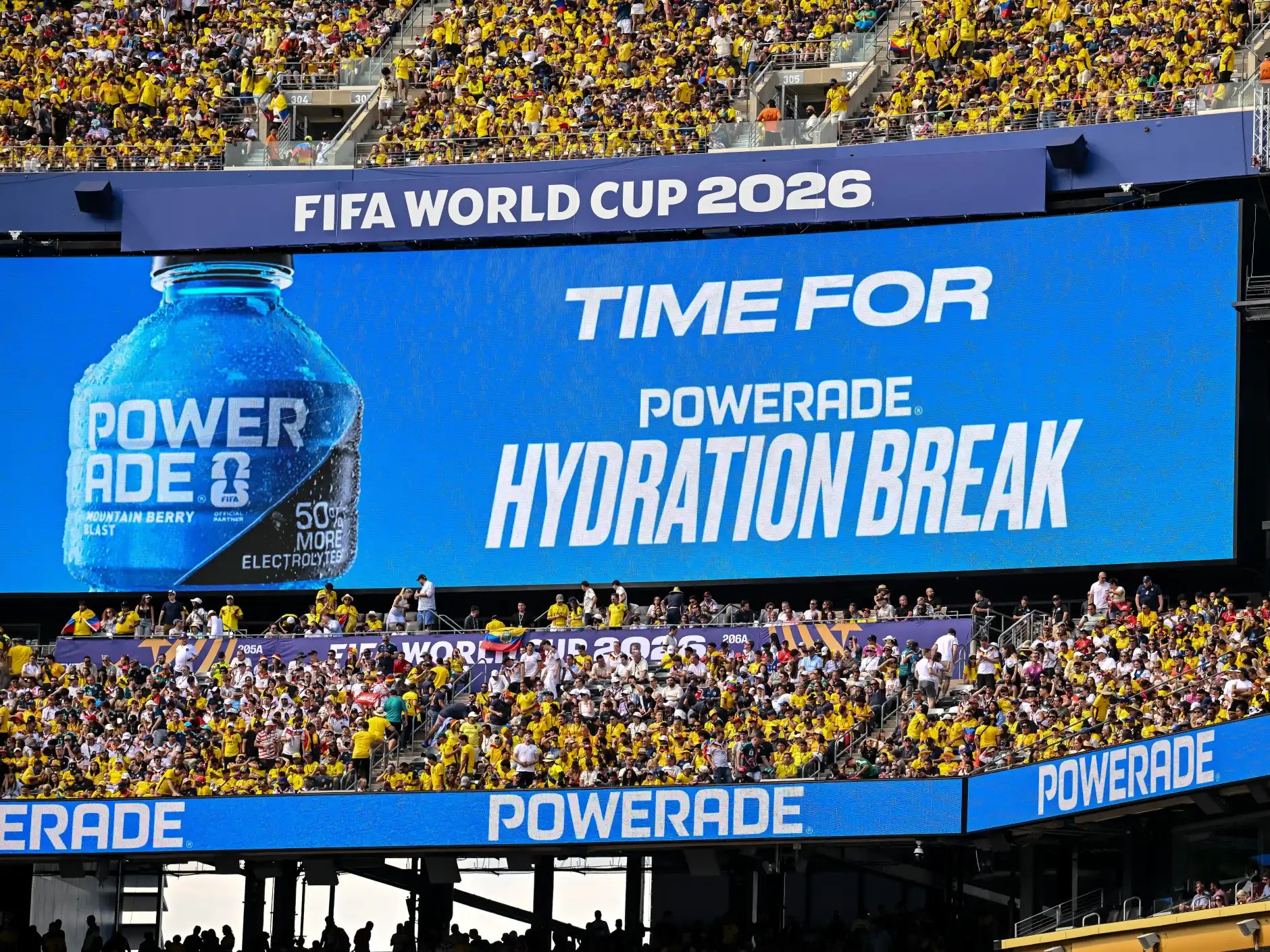
Another example is the "water break" introduced for the first time this year. Although FIFA President Infantino stated that this does not generate additional revenue for the governing body, it provides new advertising opportunities for broadcasters, making their huge broadcasting fees more worthwhile.
According to reports, Fox Sports paid $485 million for the English-language broadcasting rights in the United States, and its "water break" is sponsored by a certain brand. According to experts, the average cost of a 30-second ad during the World Cup on Fox is between $200,000 and $300,000. During U.S. team matches, a single ad slot could cost up to $750,000.
Laboure said: "The water break is purely an advertising channel. I would be very surprised if they disappear. This expanded format will remain because scale is now FIFA's business model."
However, for the host countries, the economic benefits may not have met expectations. According to data from the U.S. Department of Commerce's National Travel and Tourism Office (NTTO), during the World Cup group stage (June 11-27), overall international arrivals to the U.S. in June were essentially flat (+0.2%) compared to the same period last year.
NTTO data shows that arrivals from Europe (-1.2%) and Asia (-5.6%) declined year-over-year in June, while these two regions have been the main sources of overseas tourists; arrivals from Africa (+13.8%) and South America (+4.7%), regions with smaller visitor numbers, increased.
According to data from industry benchmark and analysis company CoStar, host cities of the World Cup raised hotel room rates, but occupancy rates and room demand did not increase.
A FIFA analysis predicted that the World Cup would inject $30.5 billion into the U.S. economy—but that calculation is based on the assumption of a massive influx of international fans, whose per capita spending is much higher than that of domestic U.S. fans.
Alexander Budzier, a research fellow in management practice at the University of Oxford and CEO of project management firm Oxford Global Projects, said that the long-term economic benefits of hosting such a large sporting event simply cannot be realized, and host cities typically see a significant drop in tourist numbers because many people want to avoid the chaos brought by the event.
An analysis by North Carolina State University shows that the 16 World Cup host cities in North America (11 in the U.S., 3 in Mexico, 2 in Canada) each must invest between $100 million and $200 million in infrastructure, transportation, and security. But that's just the beginning. FIFA also requires host cities to exempt it from municipal taxes and seek exemptions from applicable state taxes, as explicitly stated in the hosting contract for Kansas City. Where legal tax exemptions are not possible, host cities typically agree to compensate or reimburse FIFA for these tax costs.
According to a report by The New York Times last month, three states—Florida, Georgia, and Missouri—exempted at least $57.8 million in state and local tax revenue to host World Cup matches.
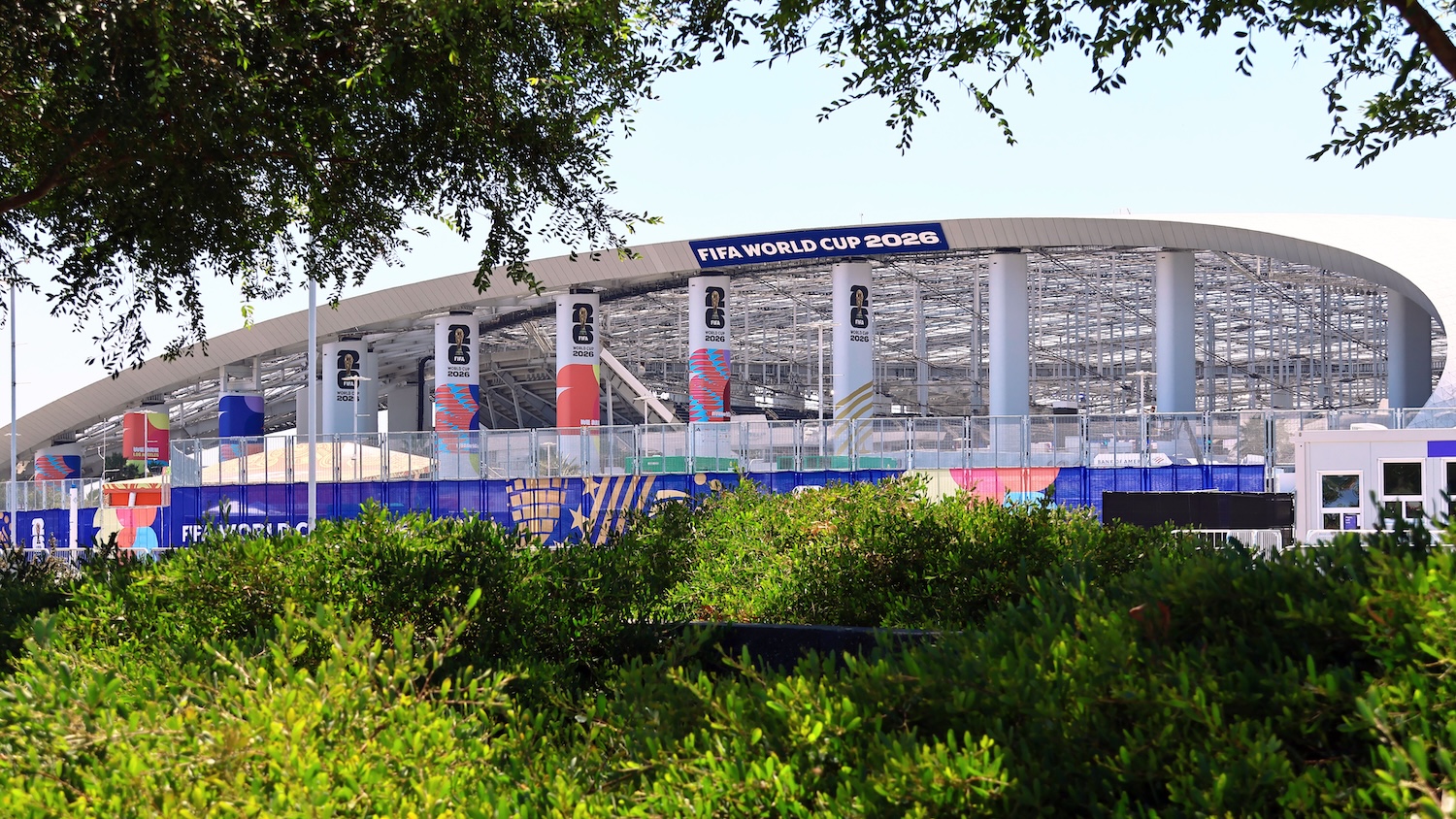
Some cities, such as Chicago, voluntarily withdrew from hosting due to high costs. According to the Chicago Sun-Times, Chicago withdrew its bid in 2018 because then-Mayor Rahm Emanuel believed FIFA could not provide the necessary guarantees to protect local taxpayers from financial liability. Las Vegas considered bidding but encountered insurmountable logistical obstacles—the venue was too small. So, during this World Cup, Las Vegas instead hosted tens of thousands of viewing parties.
However, this World Cup has already avoided the biggest expense of hosting—infrastructure investment. Qatar built seven new stadiums and renovated one existing stadium for the event, with total costs between $6.5 billion and $10 billion. In contrast, this World Cup, the United States, Canada, and Mexico all reused existing stadiums, with only some venues undergoing renovations and expansions.
| Sources: Forbes; BBC; University of North Carolina official website
| Image credits: North Carolina State University official website; World Cup official Instagram