Global Sports Tourism Market Reaches $918.5 Billion in 2025, Set to Quadruple in the Next Decade
The 2026 Bologna International Tourism Exhibition (BIT 2026) recently released key data on sports tourism.
According to data from consulting firm Fundamental Business Insights, the global sports tourism market reached $918.5 billion in 2025 and is projected to climb to $4.61 trillion by 2035, demonstrating strong long-term growth momentum.
Another set of data from the World Tourism Organization (formerly UNWTO) indicates that ‘sports-oriented’ tourists currently account for approximately 10% of global tourism spending.
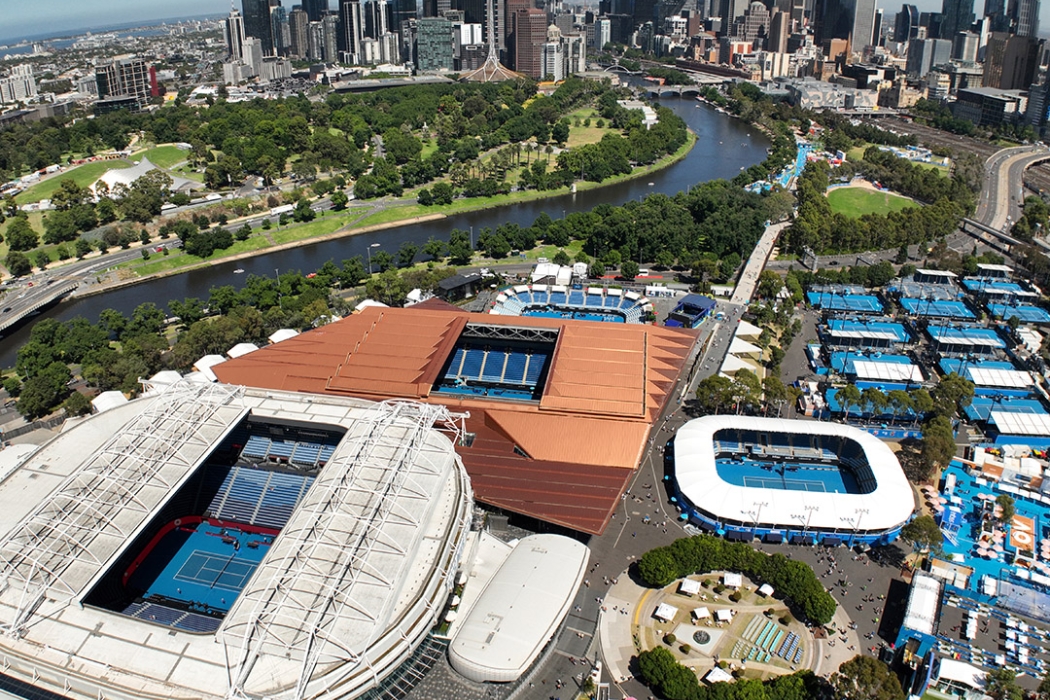
Above: Melbourne Park, venue for the Australian Open
Fundamental Business Insights also noted that Europe is a key destination for sports tourism, accounting for 39% of the global sports tourism market share in 2025. The latest edition of the OECD report "Tourism Trends and Policies 2024" also shows that sports tourism is a core driver of tourism recovery in the post-pandemic era, with market sizes in several European countries surpassing pre-pandemic levels.
Among European countries, Italy's sports tourism market shows vibrant growth.
A joint analysis by the Italian National Tourism Agency, the Bank of Italy, the National Institute of Statistics, and the Italian Entertainment and Creative Industries Association shows that in 2025, tourism contributed €237.4 billion to Italy's economy, with major sports events playing a significant role. Italy's sports tourism industry grew by 3.3% year-on-year in 2025, with over 479.7 million sports tourism visits nationwide.
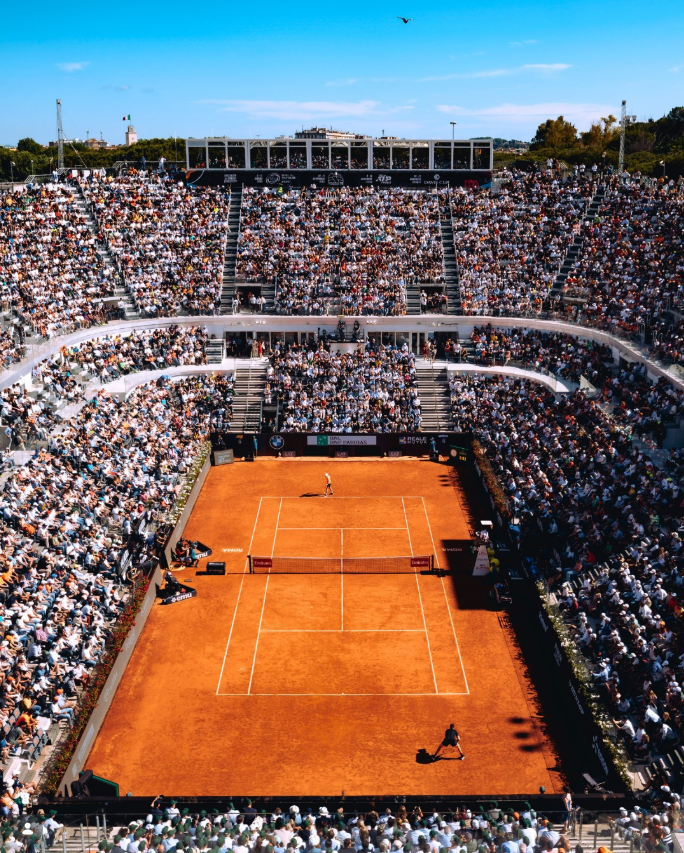
Above: Foro Italico Tennis Center, venue for the Italian Open (also known as the Rome Masters)
BIT 2026 stated in its official press release that the sports tourism sector is currently undergoing a transformation that can be described as "structural."
The connotation of sports tourism is no longer limited to events themselves. Today, football matches, the Olympics, and top international sports leagues are integrating with more accessible and lower-barrier recreational sports tourism, which deeply combines outdoor experiences, lifestyle, cultural exploration, and sustainable development concepts. In this context, sports have evolved into a full-cycle immersive experience, attracting tourists from pre-trip planning to in-trip participation and post-event reflection, breaking the seasonal limitations of the tourism industry and fostering deeper connections between tourists and destinations.
Among various sports, football remains the core driving force of global sports tourism.
Taking the recently concluded La Liga match between Real Madrid and Barcelona as an example, the event attracted over 81,000 spectators to the Santiago Bernabéu Stadium in Madrid. According to data analytics firm Datapowa, the single-day derivative economic benefits of this match alone exceeded €60 million, not including the commercial value brought by 650 million global television viewers.
The 2026 FIFA World Cup in the United States, Canada, and Mexico is also expected to bring large-scale tourist flows to North America.

Above: La Liga match between Real Madrid and Barcelona on January 23, 2026
Tennis also deserves attention for its strong growth. In 2025, the Italian Tennis Federation generated over €230 million in revenue, surpassing the Italian Football Federation's €200 million. The ATP Finals in Turin and the Italian Open in Rome performed impressively: The 2025 Italian Open set an attendance record, with over 360,000 tickets sold.
About the Bologna International Tourism Exhibition
The Bologna International Tourism Exhibition (BIT) is Italy's largest and one of Europe's most influential professional tourism exhibitions. It is also a key B2B exchange platform for the global tourism industry, held annually. The 2026 edition will take place from February 10 to 12 in Milan, focusing on six major sectors: Italy, World, Travel Experts, Hospitality, Innovation, and Transportation.
| Image sources: Australian Open, Italian Open, La Liga official websites